
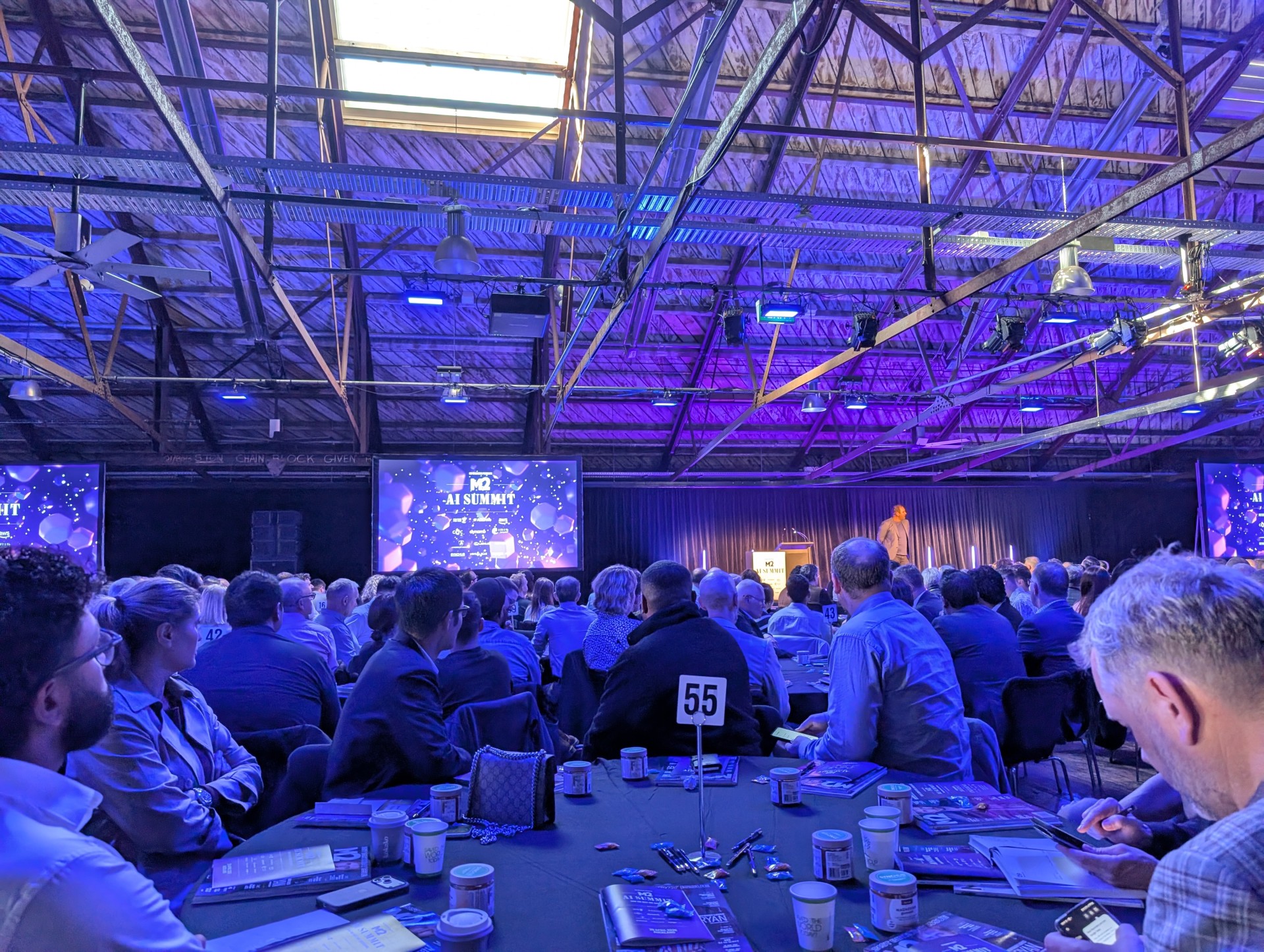
I attended the M2 AI Summit yesterday, and one thing was immediately clear: the pace of change in AI over the past 12 months has been staggering.
Last year, much of the conversation centred around potential, pilots, proofs of concept, and “what if.” This year, it’s different. We’re now firmly in the era of application. AI is no longer just something organisations are experimenting with. It’s something they’re actively building into how work gets done.
One of the biggest shifts is the move toward automated, stitched-together workflows.
Instead of standalone tools, we’re seeing ecosystems:
What used to take multiple systems (and people) can now be orchestrated with surprisingly little friction.
Another theme that stood out was what many are calling “vibe coding.”
This isn’t traditional development. It’s:
The barrier to creating useful tools has dropped significantly. You no longer need to be a specialist developer to stitch together a working solution. You just need clarity on the problem you’re solving.
That’s a massive unlock.
Despite all this progress, there was also a sobering undercurrent.
A number of organisations are still struggling to see real return on investment from AI.
Why?
Because in many cases, it’s still:
AI for the sake of AI.
Common pitfalls include:
The message was clear: AI isn’t the strategy. It’s the enabler.
Without a clear “why,” even the best tools won’t deliver value.
Perhaps the most important takeaway wasn’t technical at all. It was human.
The organisations seeing success are the ones that are:
Because no matter how advanced the tech gets, adoption still comes down to people.
One simple but powerful idea that came up repeatedly was the importance of sharing AI success stories internally.
Not in a top-down way, but through:
When people see how their peers are using AI to save time or improve outcomes, it becomes real, and momentum builds organically.
Another emerging best practice is the creation of internal AI knowledge hubs:
This helps organisations move from isolated experimentation to repeatable capability.
Instead of everyone reinventing the wheel, knowledge compounds.
If last year was about possibility, this year is about practicality.
AI has moved from hype to utility, but the gap between those getting value and those not is widening.
The difference isn’t the tools.
It’s:
The organisations that get this right won’t just use AI.
They’ll build it into how they operate.

